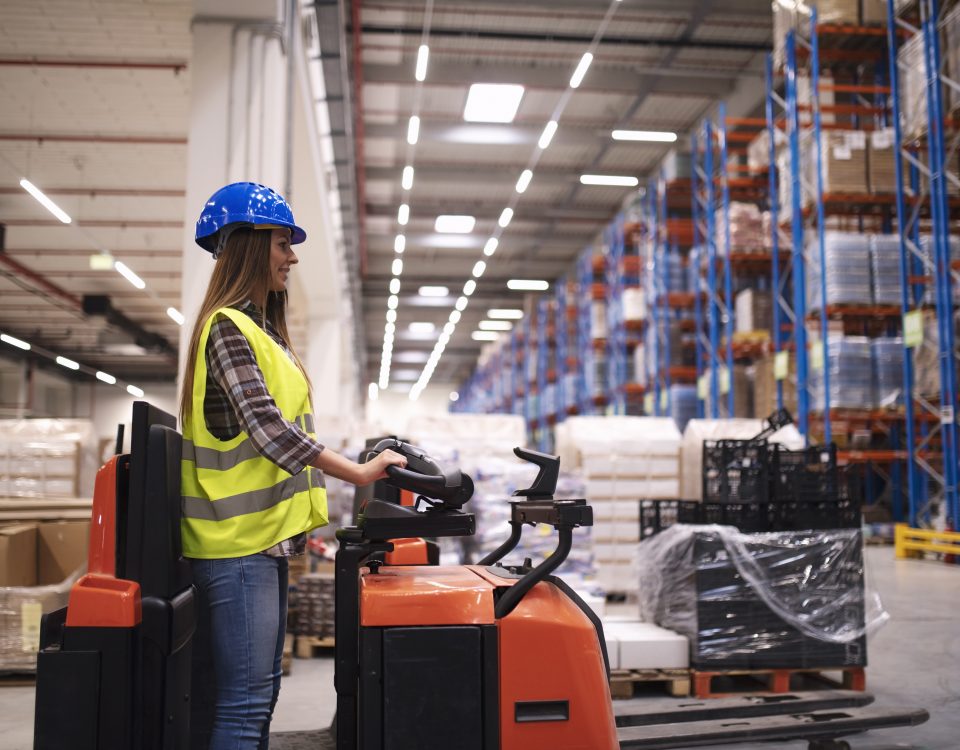
B2B Guide: How to Source Wholesale Goods from UK Cash & Carry Stores
09/02/2026
From farmgate inflation to shrinking margins, Europe’s agricultural system is being reshaped by cost, climate and competitiveness
Europe’s food system remains one of the most economically and strategically important pillars of the continent’s economy — but behind the abundance of supermarket shelves and export strength lies a sector under visible strain.
From soaring food prices and volatile crop markets to structural dependence on subsidies and climate-linked production risks, the latest figures from across the European Union paint a picture of an industry that is still vast, still essential — but increasingly under pressure.
At one end of the supply chain, households are paying sharply different prices for food depending on where they live. At the other, farmers are facing a tougher commercial reality: rising input costs, fluctuating commodity values, tighter environmental obligations and a growing need to modernise.
The numbers are striking.
In 2023, the EU produced 272 million tonnes of cereals, 161 million tonnes of raw milk and 20.6 million tonnes of pigmeat, underlining the sheer scale of European agriculture. Yet agriculture contributed just 1.3% of the EU’s gross value added, a reminder of a longstanding paradox: food production remains strategically indispensable, while often generating relatively modest economic returns compared with the broader economy.
That imbalance is becoming harder to ignore.
The new geography of food prices in Europe
One of the clearest signals of distortion in the food economy is now visible at consumer level.
In 2024, food prices were highest in:
- Luxembourg — 125.7% of the EU average
- Denmark — 119.3%
- Ireland — 111.9%
At the other end of the scale, the lowest food price levels were recorded in:
- Romania — 74.6% of the EU average
- Slovakia — 82.9%
- Poland — 85.6%
This gap is more than a matter of shopping baskets. It reflects deeper structural differences in wages, logistics, land costs, retail concentration, taxation, labour and purchasing power across the bloc.
For businesses operating across Europe — particularly in wholesale, retail, sourcing and food distribution — these disparities matter. They influence where products can be competitively sold, where supply chains can be anchored, and where margin pressure is likely to be most severe.
In effect, Europe does not operate as a single food-price market. It operates as a highly integrated food economy with sharply unequal consumer cost realities.
A continent still built on farms
Despite urbanisation and the growing dominance of services, Europe remains physically shaped by agriculture.
There were 9.1 million farms across the EU in 2020, and they used 38.4% of the bloc’s total land area. That is a remarkable footprint in an economy increasingly defined by digital infrastructure, finance, logistics and advanced services.
And yet, the farm base itself is highly fragmented and structurally uneven.
The dominant model remains the family farm. Roughly 9 in 10 EU farms are considered family farms, underlining how much of European agriculture still depends on household labour, inherited land structures and small-to-medium-scale operations rather than corporate agribusiness in the American sense.
That has profound implications for productivity, succession, financing and resilience.
The average farm may still be central to the cultural identity of Europe, but it is also increasingly exposed to the hard economics of modern food production: input inflation, labour shortages, machinery costs, compliance burdens and weather volatility.
Specialisation is rising — but diversity still matters
European farming is not one market. It is a mosaic of business models.
In 2020, 58.2% of EU farms were crop specialists, while 21.7% specialised in livestock and 19.3% were mixed farms.
Among crop specialists, the largest categories included:
- General field cropping
- Cereals, oilseed and protein crops
- Olives
- Fruit and citrus
- Vineyards
Among livestock specialists, the most common activities included:
- Dairying
- Cattle-rearing and fattening
- Poultry
- Sheep, goats and other grazing livestock
That distribution matters because specialisation can improve efficiency and output, but it also increases exposure.
A cereal-heavy operation is more vulnerable to fertiliser and energy shocks. A dairy farm is more exposed to feed prices and environmental regulation. Fruit and olive producers are acutely exposed to climate variability, water stress and disease risk.
In other words, specialisation can drive productivity — but it can also amplify fragility.
The inflation shock has moved upstream
If consumers felt the pain of food inflation in recent years, producers were hit earlier — and often harder.
The trajectory of agricultural output prices since 2020 reveals the scale of disruption. Across multiple crop categories, prices accelerated sharply, reflecting not only post-pandemic imbalances but also poor growing conditions, fertiliser cost increases, energy shocks, trade disruption and the wider effects of the war in Ukraine.
Some of the steepest price movements between 2022 and 2023 were recorded in:
- Olive oil — +69.3%
- Potatoes — +28.8%
- Fresh vegetables — +15.7%
- Fruits — +14.3%
- Sugar beet — +13.8%
The standout story is olive oil — a product that has increasingly become a symbol of how climate and inflation now collide in the food economy. Drought, lower yields and tighter supply turned what was once a stable pantry staple into a case study in agricultural scarcity pricing.
By contrast, some output price peaks seen in 2022 softened in 2023 for oilseeds, wine, cereals and oleaginous fruits, showing that not all inflation is linear and that agricultural markets remain highly cyclical.
Still, one conclusion is unavoidable: in 2023, all of the crop groups presented remained more expensive than in 2015.
That means the food inflation episode is not just a short-term shock. It may represent a structural repricing of agricultural production in Europe.
A sector that matters far beyond the farmgate
Agriculture’s direct contribution to GDP may be relatively small, but its multiplier effect across the wider food economy is enormous.
Once farming is connected to transport, processing, retail, hospitality and exports, the economic footprint becomes far more significant.
In 2022:
- The EU had 309,000 food and beverage processing enterprises
- They employed 4.7 million people
- They added €266 billion in value
Meanwhile, 2.7 million enterprises were involved in wholesaling, retailing and serving food and beverages, employing 16.9 million people and generating €507 billion in added value.
These are not peripheral industries. They are core to employment, regional development, household spending and industrial output.
Food is not merely an agricultural issue. It is a manufacturing issue, a logistics issue, a retail issue, a labour issue and increasingly, a geopolitical issue.
The logistics backbone of Europe’s food system
The physical movement of food remains one of the least glamorous but most critical parts of the supply chain.
In 2023, heavy goods vehicles registered in the EU transported:
- 1.3 billion tonnes of agriculture, forestry and fishery products
- 1.6 billion tonnes of food, beverages and tobacco products
That level of freight activity underlines a simple commercial truth: Europe’s food system runs on roads, warehousing, cold chain efficiency and cross-border distribution.
For wholesalers, importers, transport firms and B2B marketplaces, this is where margin, reliability and competitiveness are increasingly won or lost.
As food systems become more volatile, logistics is no longer a back-office function. It is a strategic advantage.
Consumers are spending more — whether they want to or not
In 2022, people in the EU spent an average of €3,980 per person on food, beverages and catering services, up 14.7% from 2021.
That rise reflects more than discretionary dining or premiumisation. It reflects inflation feeding directly into household budgets.
And this matters politically.
Food is one of the most visible and emotionally sensitive components of inflation. Consumers may not closely track industrial energy prices or upstream commodity markets, but they immediately notice the cost of bread, milk, meat, cooking oil and fresh produce.
This is one reason agriculture has re-entered the political mainstream across Europe.
The CAP remains one of Europe’s most powerful economic tools
The financial architecture holding much of European agriculture together remains the Common Agricultural Policy (CAP) — still one of the EU’s most significant spending programmes.
In 2022, CAP financing accounted for 24.6% of the EU’s total expenditure.
The breakdown was substantial:
- €38.2 billion in direct payments
- €13.9 billion for rural development
- €2.6 billion in market measures
Relative to agricultural income, CAP support represented 28.6% of EU agricultural factor income in 2022 — a level that underlines how deeply embedded public support remains in the economics of farming.
That raises a difficult but unavoidable question:
How commercially viable is European farming without policy support?
The CAP’s defenders argue that agriculture is unlike most sectors. It must absorb weather risk, ensure food security, maintain rural communities, protect biodiversity and preserve landscapes — all while operating in globally competitive commodity markets.
Its critics argue that the system can entrench inefficiency, distort incentives and delay structural modernisation.
Both sides have a point.
The next CAP is about more than subsidies
The CAP 2023–2027, which came into force on 1 January 2023, carries a total budget of €387 billion, split between:
- the European Agricultural Guarantee Fund (EAGF)
- and the European Agricultural Fund for Rural Development (EAFRD)
But this is not just a continuation of old subsidy logic.
The new framework places greater emphasis on:
- eco-schemes
- climate-friendly farming
- biodiversity protection
- support for smaller farms
- younger farmers
- gender equality
- fairer positioning of farmers in the food supply chain
Notably, 40% of total CAP expenditure from 2023 to 2027 is intended for climate action.
That is both ambitious and contentious.
Because while policymakers increasingly see farming as part of the climate solution, many farmers see themselves being asked to do more with tighter margins, greater compliance costs and little room for operational error.
That tension is now one of the defining fault lines in European agriculture.
Food security is no longer a theoretical debate
For years, Europe treated food resilience as largely solved.
That assumption no longer holds.
Climate volatility, war-linked trade disruption, fertiliser shocks, labour shortages, transport bottlenecks and cost inflation have all exposed the fragility beneath the surface of a highly productive food system.
The issue is no longer simply whether Europe can produce enough food.
The issue is whether it can do so competitively, sustainably, profitably and reliably enough to remain resilient in the next decade.
That challenge reaches far beyond farmers.
It affects:
- manufacturers
- retailers
- importers
- distributors
- hospitality groups
- transport operators
- investors
- governments
And ultimately, every consumer.
Conclusion: Europe’s food economy is entering a harder era
The romantic image of European agriculture — family farms, local produce, rolling fields and generational continuity — still carries cultural power.
But economically, the sector is entering a far more demanding phase.
Food is becoming more expensive to grow, more expensive to move, more expensive to regulate and more politically sensitive to mismanage.
At the same time, agriculture remains indispensable to Europe’s strategic autonomy, environmental ambitions, trade balance and rural stability.
That is why the future of farming is no longer a niche sector story.
It is a boardroom issue.
A supply chain issue.
A climate issue.
A competitiveness issue.
And increasingly, a geopolitical one.
Europe’s food economy is not shrinking into irrelevance.
It is becoming too important to overlook.